The map
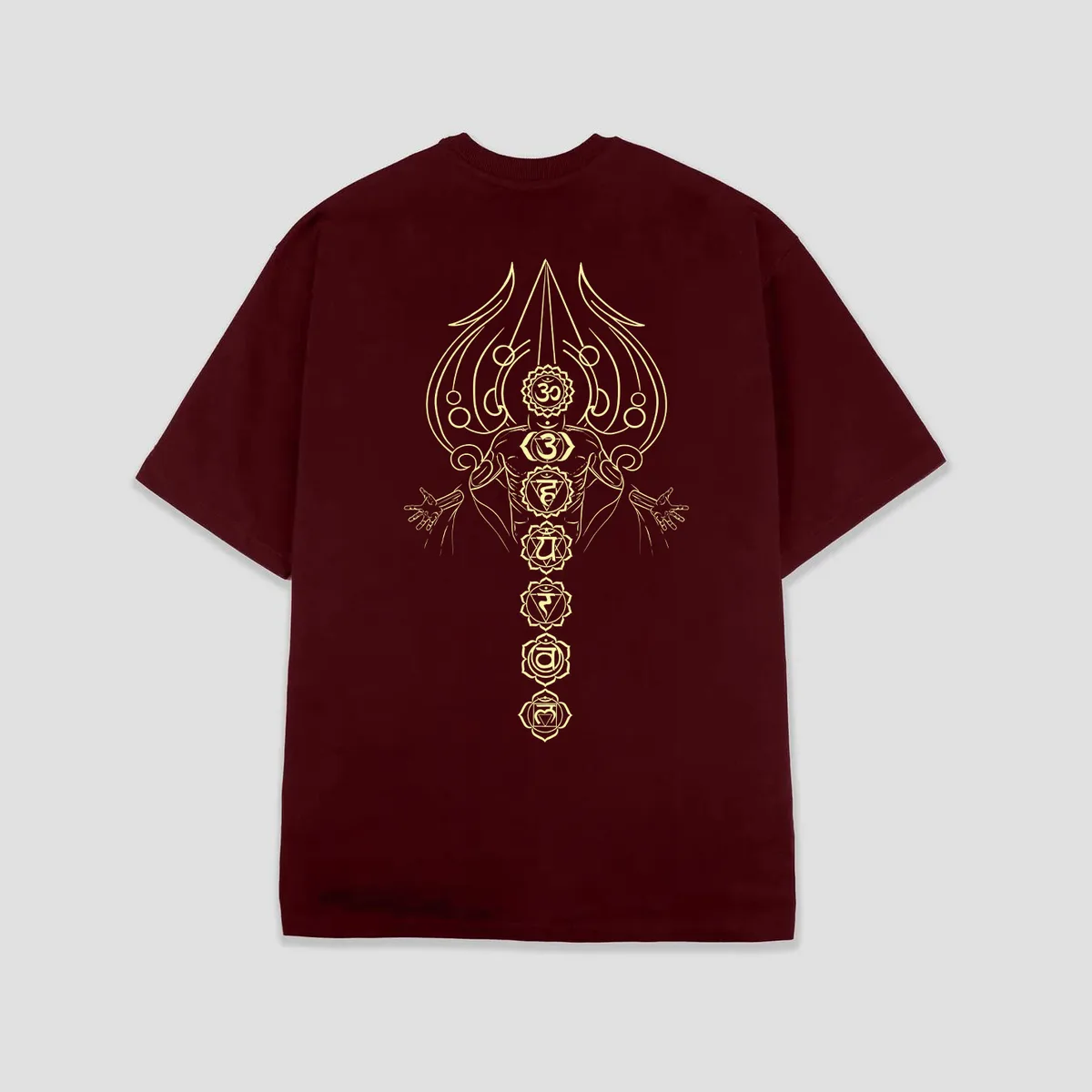
The yogic tradition describes a dormant energy — kundalini, 'the coiled one' — resting like a serpent at the base of the spine, and seven stations on its way up: muladhara at the root (survival), svadhisthana (desire), manipura (will), anahata at the heart (love), vishuddha at the throat (truth), ajna between the brows (insight), sahasrara at the crown (union). Whether you read the chakras as subtle anatomy or as psychology, the map is the same: a human being is a ladder, and most of us live on the bottom rungs.
The ascent is a discipline
Nothing in the tradition says the serpent rises on its own. Breath, posture, ethics, attention — the entire technology of yoga exists to move energy up that ladder, gate by gate. This is why we render the chakras in exact, minimal geometry rather than neon gradients: the ascent is precise work, and the design should respect that. For those in the middle of becoming.
The witness beyond the body
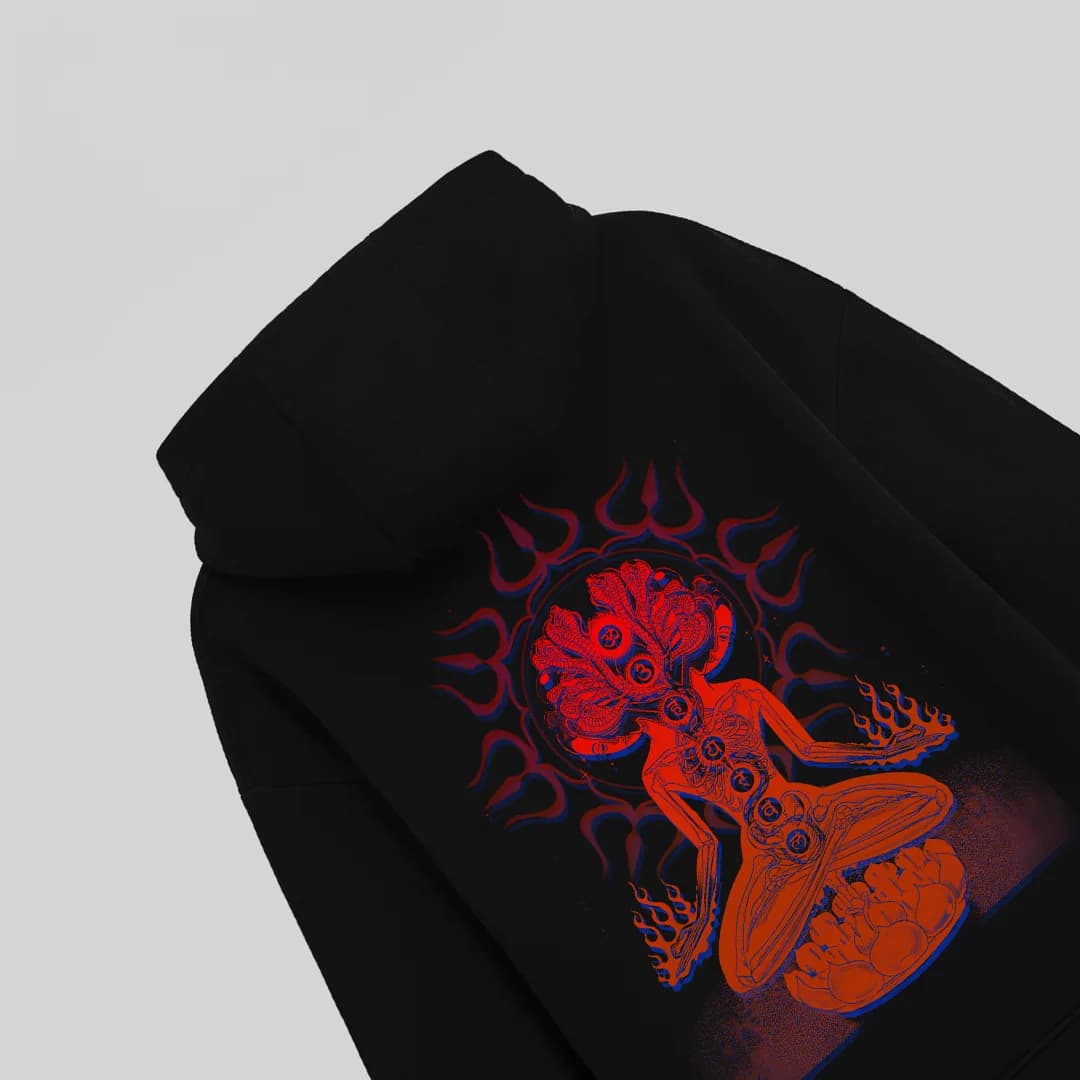
Above the map sits the tradition's boldest claim: something in you watches even sleep. The Mandukya Upanishad calls its fourth state turiya — the witness, consciousness untethered from the body it rides. Our Astral design holds that idea in cosmic minimalism: the observer, worn. You are not the storm of thought; you are the sky it happens in.