The Gita's central image
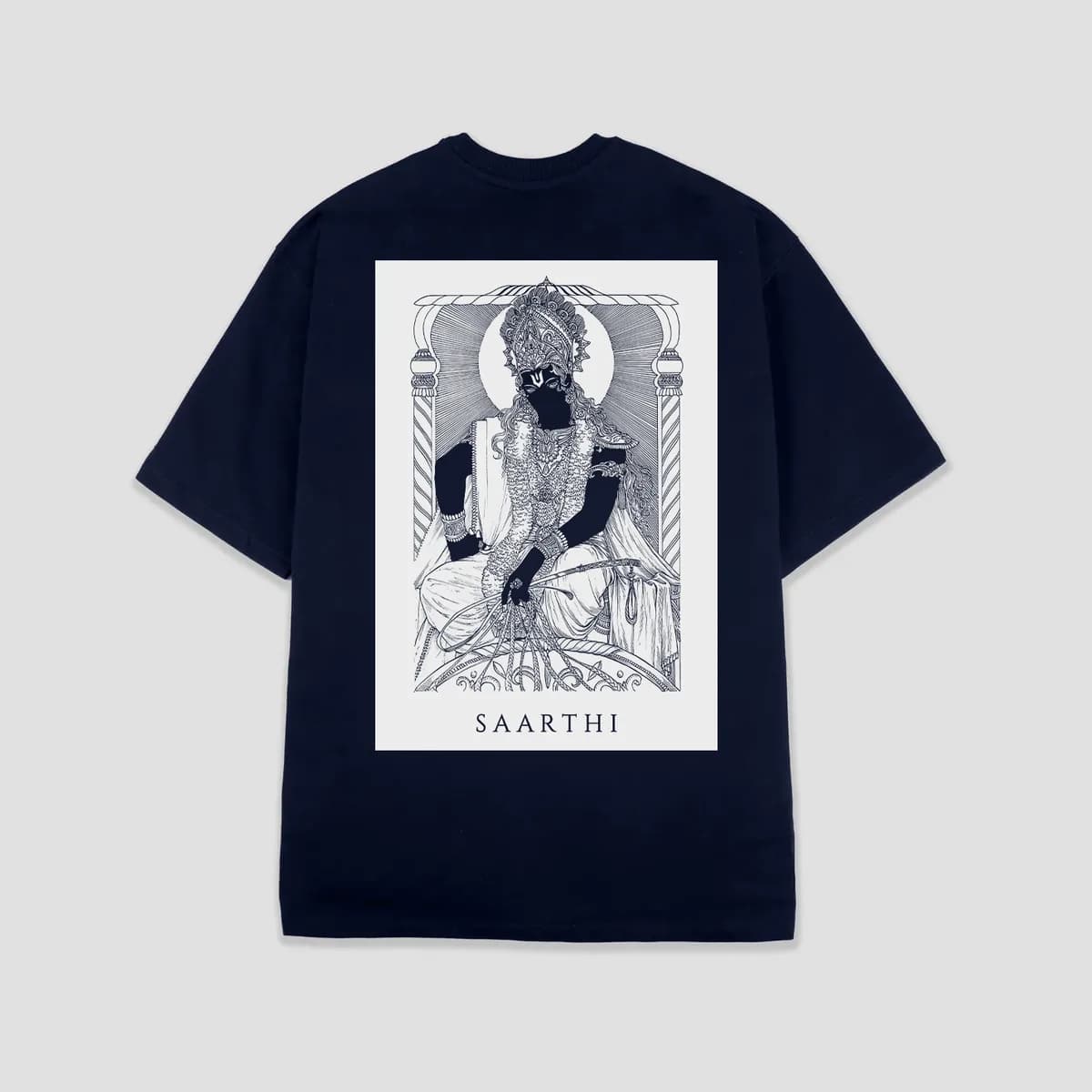
Kurukshetra, two armies drawn up, and the most quoted conversation in Indian history happens in a chariot between them. Notice the seating: Arjuna, the human, holds the bow. Krishna — God himself — holds the reins. He will not fight the war for Arjuna. He will steer, counsel, and reveal, but the bow stays in human hands. That is the Gita's whole theology of action in one image: nishkama karma, act without attachment to the fruit, and let the charioteer worry about the road.
Saarthi means trust
A saarthi is a charioteer, and choosing one is an act of trust — you watch the battle; someone else holds the direction. The Saarthi tee is for the people who have found that arrangement with life: full effort, open hands. It is the hardest instruction in the Gita and the only one it repeats.
Leela: the universe is play
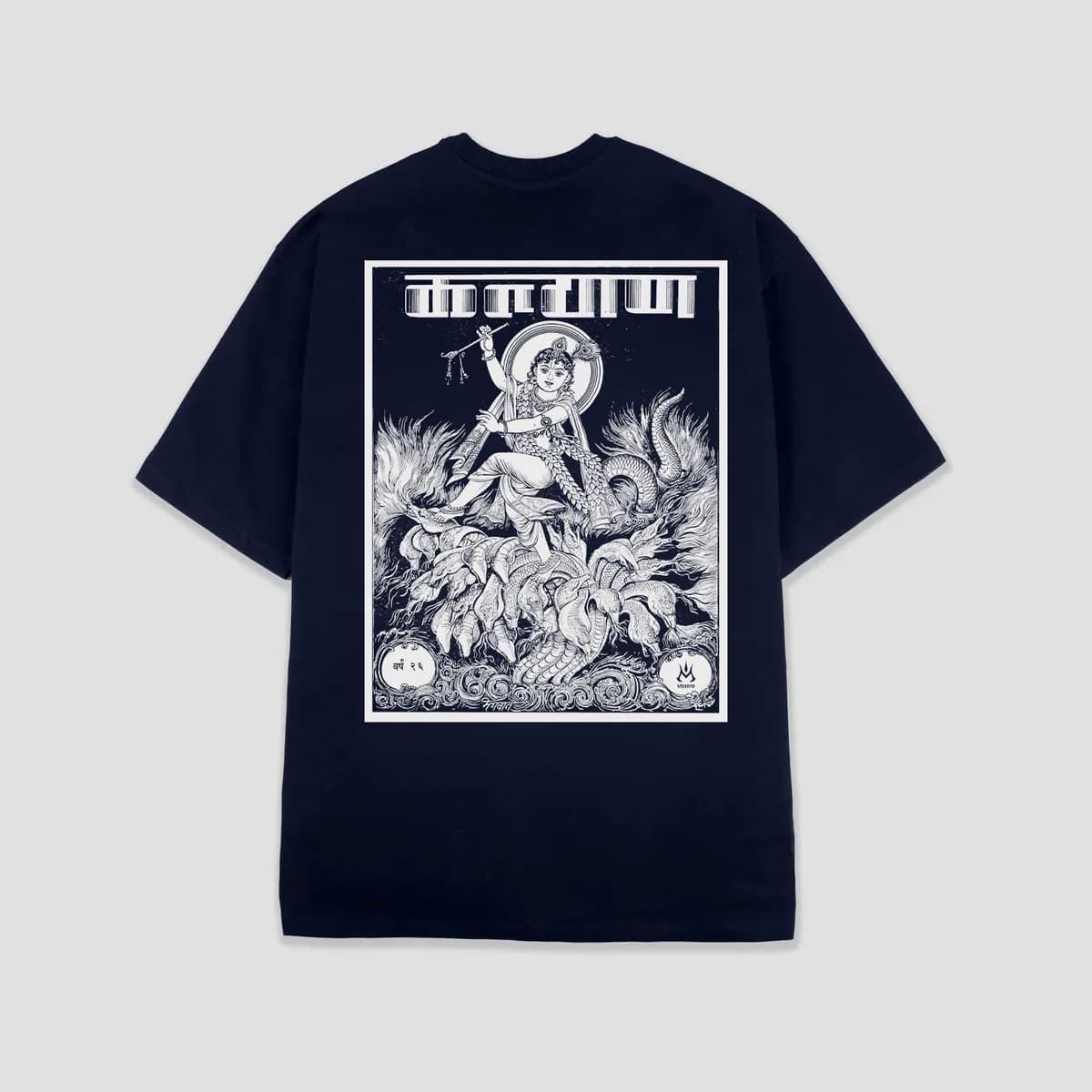
The same Krishna who counsels on a battlefield grew up stealing butter and playing a flute — and the tradition refuses to treat these as contradictions. Leela means divine play: the teaching that the cosmos is not a courtroom but a dance, made for the joy of the making. Seriousness is not the same thing as depth. Krishna's flute is the proof, and we printed it as rebellion against a world that has forgotten how to play.