Who is Bajrangbali?
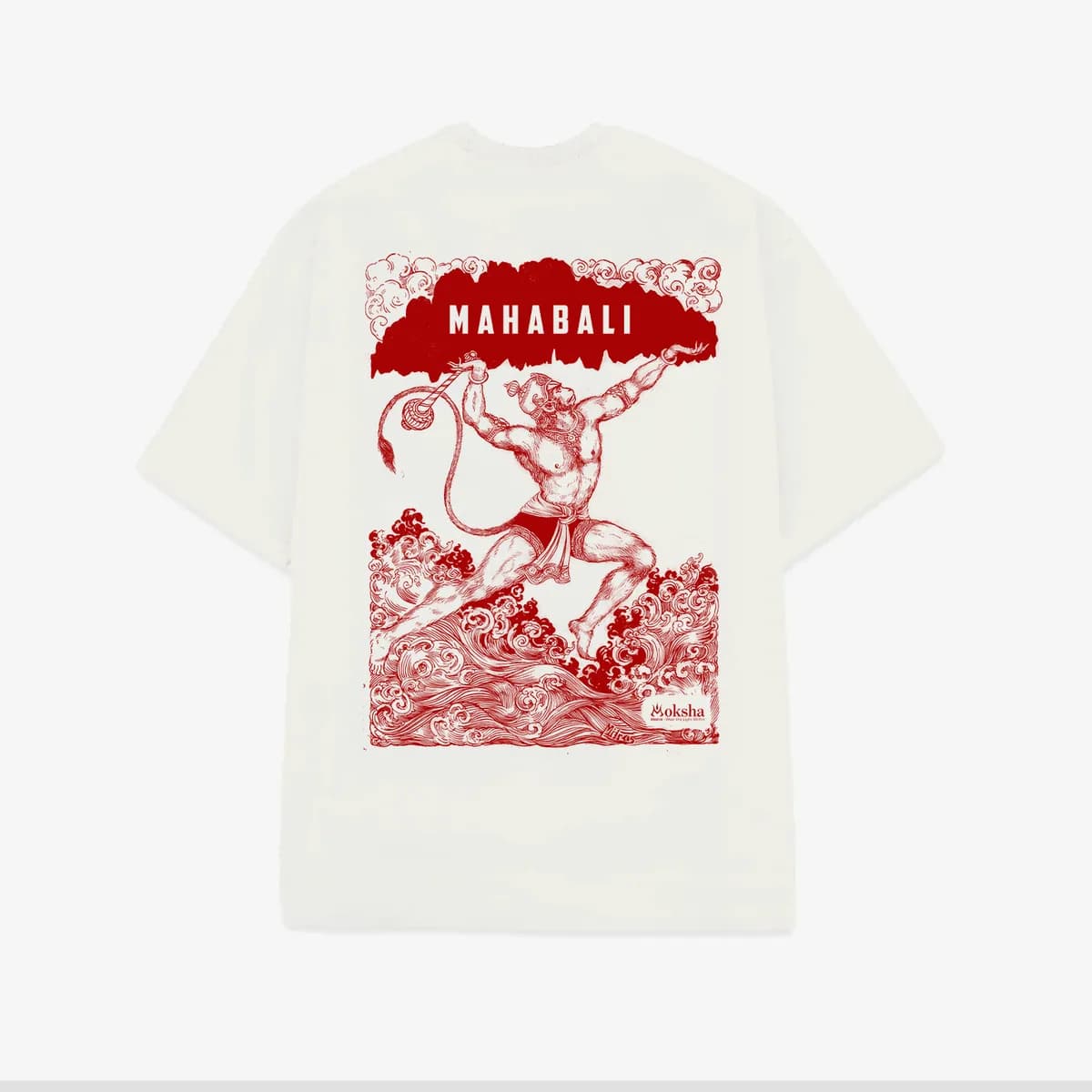
Hanuman carries many names, and each one is a thesis. Bajrangbali — the one with a body of vajra, the thunderbolt. Mahabali — the mightiest. Pavanputra — son of the wind. Sankat Mochan — the remover of crises. A being who could leap an ocean in a single stride, lift a mountain because he could not find one herb, and burn a golden city with a tail set on fire as punishment. By any measure of the Ramayana, he is its strongest character.
The paradox of Mahabali
And here is the paradox that makes Hanuman worth wearing rather than merely worshipping: the mightiest being in the story wants none of the credit. Every feat is performed in service, and every triumph is laid at Rama's feet. When asked where Rama lives, Hanuman tears open his own chest. Strength so complete it needs no display — power that kneels by choice, not by defeat. That is what Mahabali means to us, and why the word sits alone on the garment.
Why the gada?
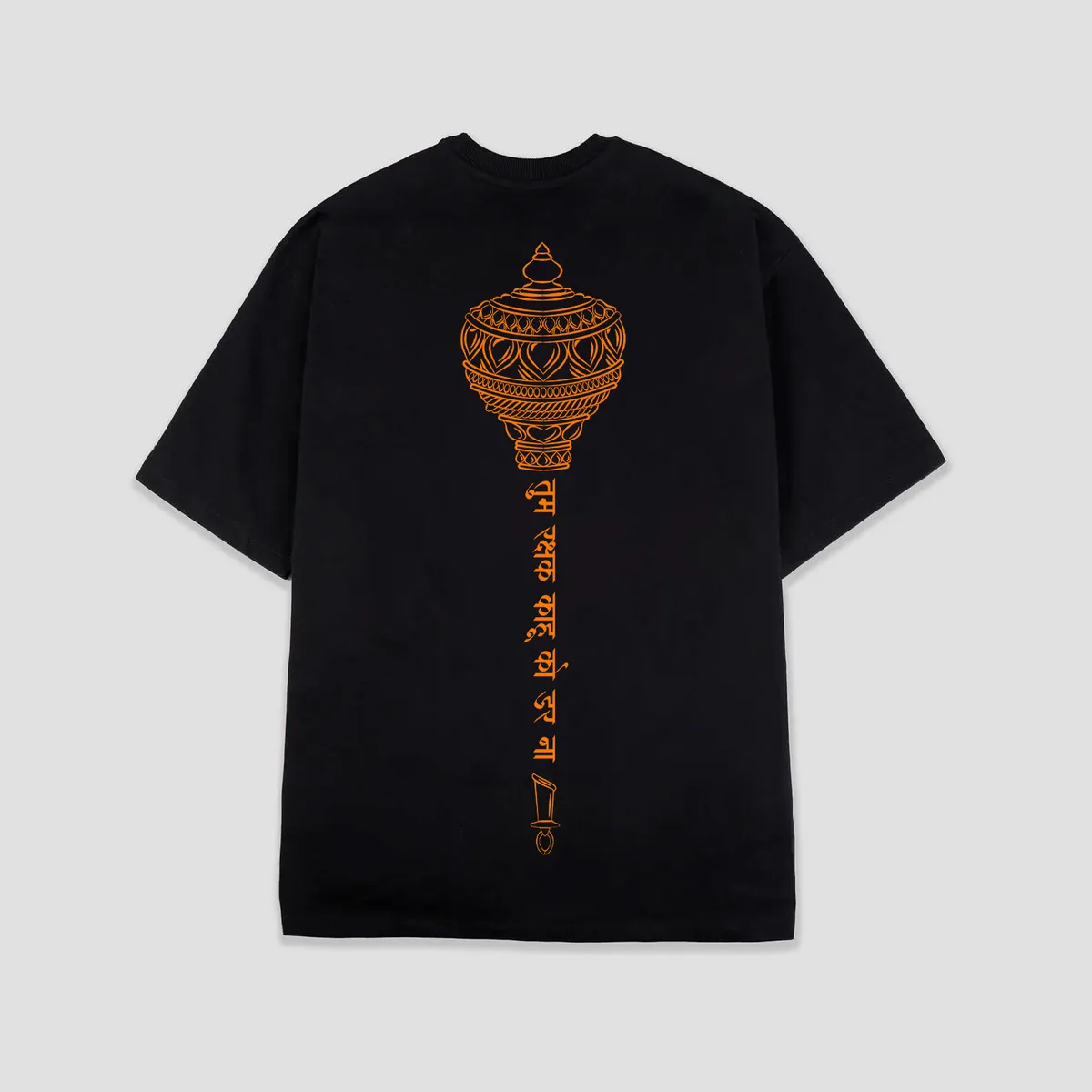
There is a lesser-told detail in the katha: Hanuman, cursed in childhood to forget his own powers, spends years as an ordinary vanara. Before the leap to Lanka, Jambavan has to remind him of what he is. The gada — the mace he carries — is not really a weapon in our reading. It is the reminder. Strength forgotten is strength lost; strength remembered, and pointed at the right purpose, moves oceans.
Devotion as discipline
Hanuman is the patron of our Bhakti collection because he settles an old argument: devotion is not softness. It is the hardest discipline there is — showing up, every day, for something larger than yourself, with everything you have. If that is how you train, how you work, how you love — this katha is already yours.